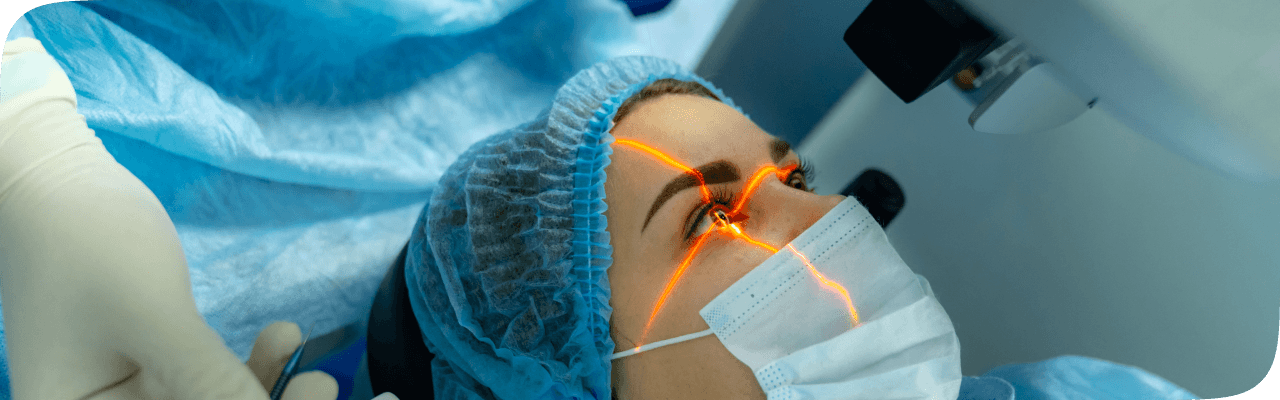
Oculoplastic procedures focus on conditions affecting the eyelids, tear drainage system, and surrounding eye structures. These treatments can improve vision, eye comfort, and cosmetic appearance.
Our experienced oculoplastic specialists provide detailed assessment and personalised treatment plans, ranging from minor in-clinic procedures to corrective eyelid surgery.
Book a specialist consultation to discuss your symptoms and treatment options.
Oculoplastic conditions can affect both the function and appearance of the eyes.
such as drooping eyelids, eyelid malposition, eyelid lumps, or watering eyes can cause discomfort, irritation, or visual obstruction.
During your consultation, your specialist will assess:
• Eyelid position
• Skin condition
• Eye comfort
• Tear drainage function
• Any eyelid growths or abnormalities
Some conditions can be treated conservatively with medication or minor procedures, while others may require planned surgery.

- Oculoplastic care focuses on conditions affecting the eyelids, tear ducts, and the structures around the eyes.
- These conditions may affect not only appearance but also eye comfort, tear drainage, and even vision.
- Oculoplastic problems include drooping eyelids, eyelid turning in or out, eyelid lumps, watery eyes, and eyelash problems.
- Some conditions are mainly functional and interfere with eye health, while others also cause cosmetic concerns.
- Specialist assessment helps determine whether the problem can be managed conservatively or needs a procedure.
- Oculoplastic conditions are often caused by ageing changes in the eyelid tissues, skin, and supporting structures.
- Some problems develop because the eyelids become loose, weak, or malpositioned over time.
- Others are caused by inflammation, blocked glands, infection, trauma, or abnormal eyelash growth.
- Sun damage and natural loss of skin elasticity can contribute to excess eyelid skin or lower lid bags.
- In some cases, eyelid lumps or lesions may be benign, while in others they may need assessment to exclude more serious causes.
- Symptoms vary depending on the condition but may include eyelid irritation, redness, soreness, or watering.
- Some patients feel a gritty or foreign body sensation if eyelashes or eyelid position are rubbing against the eye.
- Drooping or hooded eyelids can make the eyes feel heavy and may reduce the upper field of vision.
- Eyelid lumps or skin changes may be visible and can cause discomfort or cosmetic concern.
- Recurrent infection, tearing, or difficulty keeping the eye comfortable are also common symptoms in oculoplastic conditions.
- Treatment depends on the underlying problem and may include medication, minor in-clinic procedures, or formal surgery.
- Conditions such as ectropion and entropion are often treated surgically to restore a healthier eyelid position.
- Trichiasis may be managed with electrolysis or surgery to remove the misdirected lashes or the affected area.
- Blepharoplasty is used to remove excess eyelid skin and improve both appearance and, in some patients, vision.
- Many eyelid lumps and lesions can be removed under local anaesthetic, with aftercare tailored to the individual procedure.
Don’t wait. Take the first step towards life-changing results by scheduling your personal consultation today.
Q. What is an Ophthalmologist?
An Ophthalmologist is a medical doctor specialising in eye and vision care. They have trained specifically in various aspects of eye disease and ophthalmic surgery.
Q. How much does it cost to see an Ophthalmologist privately?
An Ophthalmologist is a medical doctor specialising in eye and vision care. They have trained specifically in various aspects of eye disease and ophthalmic surgery.
Q. How long is the average wait time to see our Ophthalmologist?
An Ophthalmologist is a medical doctor specialising in eye and vision care. They have trained specifically in various aspects of eye disease and ophthalmic surgery.
BOOK AN APPOINMENT