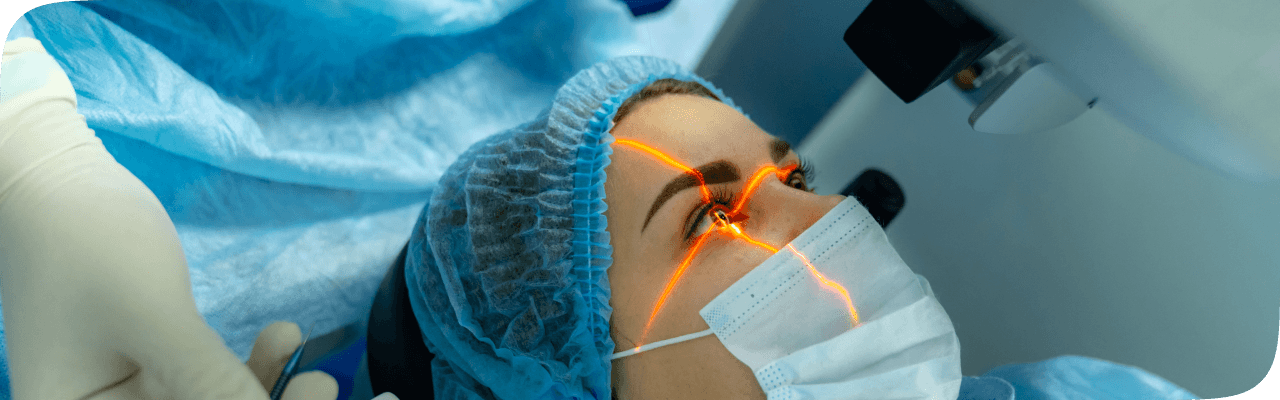
A cataract is a common eye condition where the natural lens of the eye becomes cloudy, causing blurred or reduced vision. Cataracts usually develop gradually and may affect one or both eyes.
Our experienced ophthalmic consultants provide comprehensive cataract assessment and advanced surgical treatment using modern techniques and premium intraocular lens options tailored to your lifestyle needs.
Book a specialist consultation today to discuss your vision concerns and treatment options.
While cataracts develop slowly, they can significantly affect daily life if left untreated.
As the cataract progresses, vision may become increasingly blurred, colours may appear dull, and bright lights may cause glare. This can make everyday activities such as reading, driving, or recognising faces more difficult.
Cataracts cannot be reversed with medication or glasses. Surgery is the only effective treatment and is considered a very safe and successful procedure.
At Lancashire Eye Clinic / Infinity Clinic Private, we are one of the few private centres offering immediate sequential bilateral cataract surgery, allowing both eyes to be treated during the same visit when appropriate. This option can reduce recovery time and avoid multiple surgical visits.

- A cataract is a common eye condition in which the natural lens of the eye becomes cloudy over time.
- This clouding reduces the amount of light that passes clearly through the eye and causes vision to become blurred.
- Cataracts usually develop slowly, so many people notice a gradual decline in the quality of their sight rather than a sudden change.
- The condition can affect one eye or both eyes, and it often becomes more noticeable with age.
- If left untreated, a cataract will continue to worsen and may increasingly interfere with everyday life.
- The most common cause of cataract is the natural ageing process, which changes the structure of the lens over time.
- Cataracts can also develop after an injury to the eye, particularly if the lens has been damaged.
- Certain medical conditions, including diabetes, can increase the likelihood of cataract formation.
- Some medications, especially long-term steroid use, are known to contribute to cataract development.
- In some patients, cataracts may form earlier because of previous eye surgery, inflammation, or other underlying eye conditions.
- Cataracts commonly cause blurred or cloudy vision that gradually becomes more noticeable over time.
- Many patients find that reading, driving, or recognising faces becomes more difficult as the cataract develops.
- Colours may appear duller or less vivid because less light is passing cleanly through the lens.
- Some people become more sensitive to bright lights or notice glare, especially when driving at night.
- As vision worsens, cataracts can also increase the risk of falls, reduced confidence, and loss of independence.
- Cataract surgery is the only effective treatment because there are no medicines that can remove or reverse a cataract.
- The procedure involves removing the cloudy natural lens and replacing it with a clear artificial lens implant.
- Surgery is usually performed under local anaesthetic and typically takes around 15 to 30 minutes per eye.
- Patients can choose from different lens options, including monofocal, EDOF, multifocal, and toric lenses, depending on their visual needs.
- Most patients experience clearer vision, improved colour perception, and better day-to-day functioning after surgery.
Don’t wait. Take the first step towards life-changing results by scheduling your personal consultation today.
Q. What is an Ophthalmologist?
An Ophthalmologist is a medical doctor specialising in eye and vision care. They have trained specifically in various aspects of eye disease and ophthalmic surgery.
Q. How much does it cost to see an Ophthalmologist privately?
An Ophthalmologist is a medical doctor specialising in eye and vision care. They have trained specifically in various aspects of eye disease and ophthalmic surgery.
Q. How long is the average wait time to see our Ophthalmologist?
An Ophthalmologist is a medical doctor specialising in eye and vision care. They have trained specifically in various aspects of eye disease and ophthalmic surgery.
BOOK AN APPOINMENT