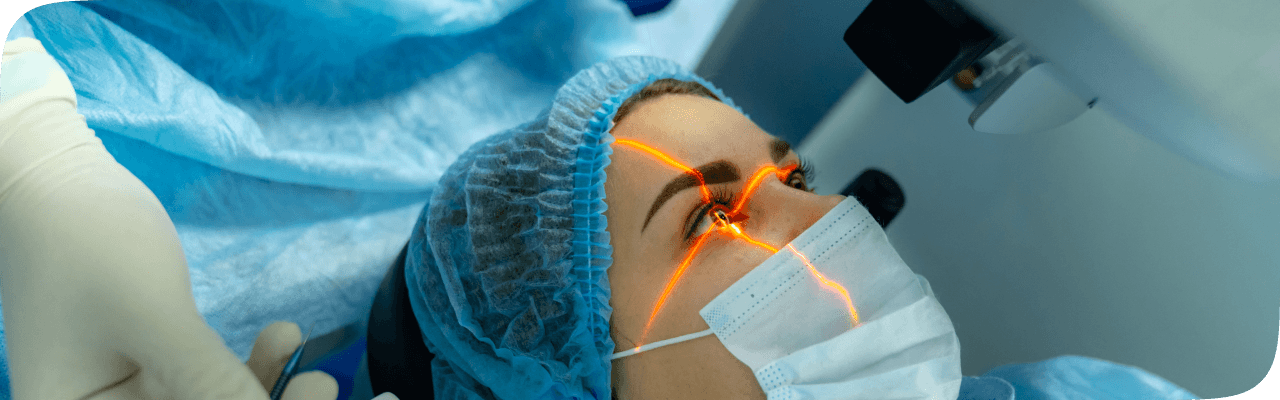
Age-Related Macular Degeneration (AMD) is one of the leading causes of vision loss in older adults. The condition affects the macula, the central part of the retina responsible for detailed vision used for reading, driving, and recognising faces.
Our retinal specialists provide advanced diagnostic imaging and modern treatment options to help slow disease progression and preserve vision.
Book a specialist consultation for a comprehensive macular assessment.

AMD affects the central vision but usually does not affect peripheral (side) vision.
The condition develops due to aging changes in the retina and may progress slowly (dry AMD) or more rapidly (wet AMD). Early detection is important to monitor the condition and begin treatment if required.
Patients with AMD may notice difficulty with reading, recognising faces, or seeing fine details clearly.
Prompt diagnosis and monitoring can help maintain useful vision for as long as possible.
- Age-related macular degeneration, or AMD, is a condition that affects the macula, the part of the retina responsible for detailed central vision.
- It is one of the leading causes of visual loss in older adults and mainly affects activities requiring fine vision.
- AMD does not usually cause total blindness, but it can make reading, driving, and recognising faces much more difficult.
- There are two main forms of the condition, known as dry AMD and wet AMD.
- Dry AMD tends to progress more slowly, while wet AMD can cause a faster and more serious loss of central vision.
- Dry AMD is caused by age-related thinning and wear of the macula over time.
- Small deposits called drusen can build up beneath the retina and contribute to degeneration of the macular area.
- Wet AMD develops when abnormal blood vessels grow beneath the retina and macula.
- These abnormal vessels can leak fluid or blood, which distorts the retina and damages central vision.
- Increasing age is the main risk factor, but smoking, family history, and cardiovascular risk factors may also increase the chance of developing AMD.
- Dry AMD often causes gradual blurring or reduction of central vision, especially for reading or close work.
- Patients with wet AMD may notice that straight lines suddenly appear bent, wavy, or distorted.
- Both forms of AMD can make it harder to see fine detail or recognise faces clearly.
- Some people notice a dark, blurred, or missing patch in the centre of their vision as the disease progresses.
- Wet AMD symptoms often come on more suddenly and should always be assessed urgently.
- Dry AMD is usually managed with monitoring, lifestyle advice, and regular retinal assessment rather than surgery.
- Wet AMD is commonly treated with anti-VEGF injections placed into the eye to reduce leakage and control abnormal blood vessels.
- These injections are performed using anaesthetic drops and are usually well tolerated by patients.
- OCT macular scans are used to monitor the retina and help determine when further injections are needed.
- Early diagnosis and prompt treatment offer the best chance of preserving useful central vision.
Don’t wait. Take the first step towards life-changing results by scheduling your personal consultation today.
Q. What is an Ophthalmologist?
An Ophthalmologist is a medical doctor specialising in eye and vision care. They have trained specifically in various aspects of eye disease and ophthalmic surgery.
Q. How much does it cost to see an Ophthalmologist privately?
An Ophthalmologist is a medical doctor specialising in eye and vision care. They have trained specifically in various aspects of eye disease and ophthalmic surgery.
Q. How long is the average wait time to see our Ophthalmologist?
An Ophthalmologist is a medical doctor specialising in eye and vision care. They have trained specifically in various aspects of eye disease and ophthalmic surgery.
BOOK AN APPOINMENT